




341: Metal Mask ⚉🛡
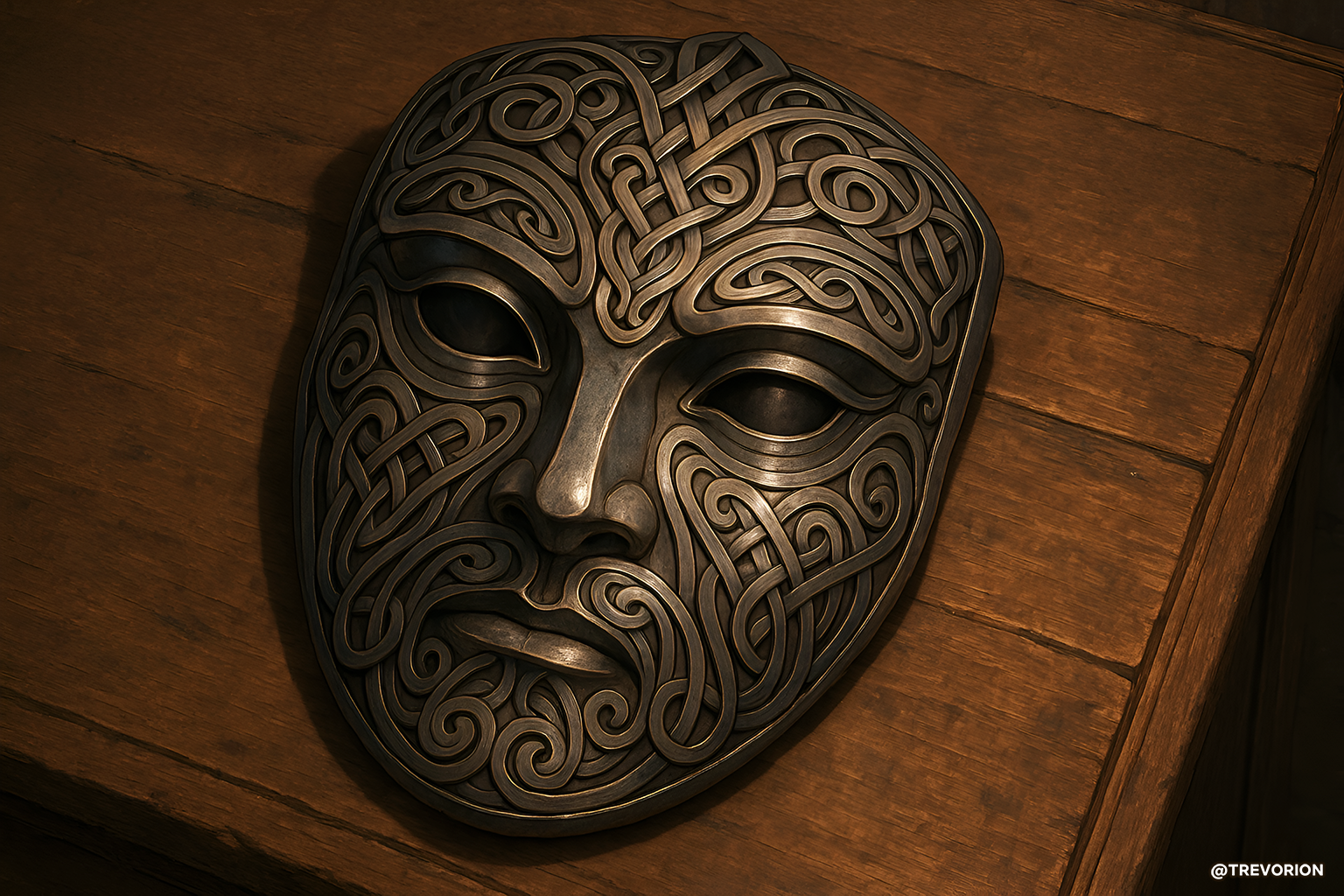
Daily Image created using ChatGPT (Anime AI Art)
⚉ The Archivist’s Mask
The mask had been buried beneath the floorboards of the old monastery for centuries, wrapped in oilcloth and sealed inside a cedar box blackened by time. When the restoration crew unearthed it, no one could explain its presence. There were no records, no inscriptions, just the weight of its craftsmanship. Cold metal etched with interlocking knotwork, hollow eyes that seemed to watch without judgment.
Dr. Louise Vint, a cultural historian specializing in Norse-Celtic syncretism, was called in to examine it. She arrived in late autumn, the wind sharp off the fjord, and the monastery half-swallowed by fog. The mask unsettled her immediately. Its hollow eyes mirrored the silence she carried deep within her own memories. The loops and curves were impossibly precise, and it had a sense of ritual embedded in its form. Not decorative. Not theatrical. It had been worn with purpose.
She found the first clue in the monastery’s cellar: a faded mural behind a crumbling wine rack. It depicted a procession of hooded figures, each bearing a mask like the one unearthed. At the center stood a figure with the same design, arms raised, surrounded by symbols of harvest and memory. Beneath it, a single word in Old Norse: minnigr, “remembrance.” Louise theorized the mask belonged to a ritual archivist, a role lost to time.
In pre-Christian enclaves, such figures were tasked with preserving communal memory, not through writing, but through embodied storytelling. They wore the mask to become anonymous vessels, reciting ancestral histories, seasonal lore, and the names of the dead. The knotwork wasn’t just decorative. It mapped mnemonic pathways, guiding the archivist’s voice. The church was known to banish most as heretics and destroy such artifacts.
One night, Louise placed the mask on a velvet stand and began to read aloud from her notes. As she spoke, the wind outside stilled. The candle flame froze, its smoke rising in a perfect line. The room felt heavier, as if the mask were listening, not to her voice, but to the memory it carried. She recited the names carved into the monastery’s foundation stones, the dates of long-passed solstices, the stories of monks who had vanished in the plague years. When she finished, the mask gleamed faintly in the candlelight as if to suggest it had done its work.
During her stay, Louise was tempted to wear it. Whenever she brushed her fingertips across the cold metal, the chill lingered longer than it should have, reaching out, embracing. She often imagined the weight of it pressing against her face, heavy with voices not her own. Would she see something else through its eyes? But she knew better. She left it displayed in the monastery’s new archive, beneath a plaque that read “To remember is to become. Minnigr.”