


Only Japan-originated works are Anime! Does this still stand?
Anime, a word that conjures vibrant visuals, epic battles, and cultural quirks, has long been tied to Japan. But as of March 30, 2025, with global influences flooding the scene, does the claim “only Japan-originated works earn the anime label” still hold water? Let’s dive into its history, test it against a kaleidoscope of examples, and see where it lands today.
The Roots: Japan’s Solo Act
Anime, short for animēshon (animation), took flight in Japan during the 1960s with Osamu Tezuka’s Astro Boy (1963), a black-and-white TV hit that fused manga aesthetics with serialized storytelling. Back then, the label was Japan’s alone. Early shorts like Imokawa Mukuzo Genkanban no Maki (1917) laid the groundwork, but the 1960s cemented anime as a cultural export. Think Speed Racer (1967) or Sally the Witch (1966).

Even early collaborations, like The King Kong Show (1966) with the USA’s Rankin/Bass, stayed Japan-led via Toei Animation. Historically, the “only Japan” claim was ironclad. Anime was born and bred in Japanese studios, distinct from Western cartoons (Wacky Races, 1968) or China’s nascent donghua (Havoc in Heaven, 1964).

Cracks in the Wall: Collaborations Emerge
The 1970s and 1980s cracked that mold. Little Nemo: Adventures in Slumberland (1989) paired Japan’s TMS with American writers, adapting a U.S. comic into an anime-esque film. Robotech (1985) stitched three Japanese series (Macross, Southern Cross, Mospeada) into an American remix; anime at its core, but reborn stateside.

Italy began collaborating on projects such as Calimero (1972) and Sherlock Hound (1984, with Miyazaki), blending European funding with Japanese ink. France joined the dance too with Ulysses 31 (1981, TMS), amongst others.

These weren’t pure Japan-originated works; the ideas often sprouted elsewhere, yet Japan’s animation prowess kept the “anime” tag intact. The claim held, but it wobbled. The origin blurred, but the production stayed Japanese.

The 2000s Boom: Global Ideas, Japanese Hands
By the 2000s, the lines got fuzzier. Afro Samurai (2007) sprang from an American mind (Derek Okahara), animated by Japan’s Gonzo, starring Samuel L. Jackson. Spider Riders (2006) mixed Canada’s Cookie Jar with Japan’s Bee Train.

Marvel and DC jumped in. Marvel Anime (2010, Madhouse) gave Iron Man and Wolverine a Japanese makeover, while Batman: Gotham Knight (2008, Production I.G) draped the Dark Knight in anime flair. These were American IPs, but Japan’s studios made them “anime” to fans. The origin wasn’t Japanese, but the execution was enough to stretch the label without snapping it.

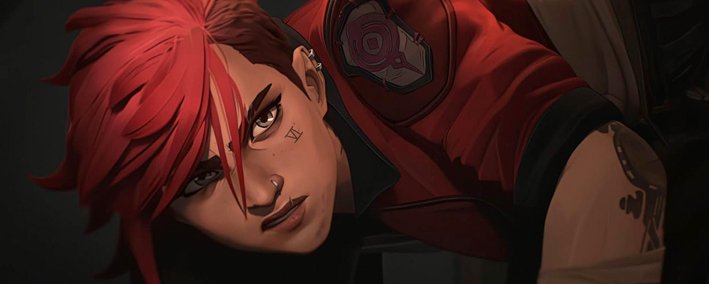
Arcane (2021) is an animated series from Riot Games based on their League of Legends universe. Co-produced with Netflix, it’s a gritty, steampunk-meets-magic tale animated by Fortiche, a French studio. It has a Western pedigree; no Japanese studios were involved. So Arcane isn’t anime by the strict “Japan-originated” rule. Style-wise, it flirts hard with anime tropes: emotional heft, cinematic fights, and deep lore. Anime is stretching beyond Japan. Arcane is a contender by feel, not by birthright, so fans slap the label on anyway.

Webtoons and Donghua: The New Frontier
Fast forward to 2025, and the game’s changed. Korean manhwa and Chinese manhua. Webtoons like Solo Leveling (2024, A-1 Pictures) and Tower of God (2020, Telecom Animation Film) are now anime staples, animated in Japan but born elsewhere.

The Journey (2021) fused Saudi Arabia’s Manga Productions with Toei Animation, while RWBY: Ice Queendom (2022, Shaft) saw Monty Oum turn the American web series RWBY (2013) by Rooster Teeth into a bona fide anime.

Donghua, China’s animation, adds another twist: The King’s Avatar (2017) and Link Click (2021) are Chinese-made, but fans still call them “anime” for their “animesque” vibe.

Japan has adapted some (Fog Hill, 2020), but donghua like Swallowed Star (2020) stays proudly Chinese.

The Verdict: True Then, Shaky Now
So, how true is it? In the 1960s, rock-solid! Anime originated in Japan, no exceptions. Early collabs (Little Nemo, Robotech) bent the rule, but Japan’s production dominance held the line. By the 2000s, with Afro Samurai and Marvel Anime, origin split from execution. Non-Japanese ideas got the anime stamp if Japan drew them. Today, in 2025, it’s half-true at best. Korean webtoons (The Boxer, 2025, Studio XTorm), Chinese donghua, and Western IPs flood the scene. Japan’s studios often animate them (Gen: Lock aside, it’s pure American mimicry), but the stories? Seoul, Beijing, Texas, Riyadh.

Does it still stand? Not fully. “Anime” isn’t just Japan-originated anymore. It’s a style, a feel. Purists cling to the old rule: Japan must birth or build it! But fans don’t care. Solo Leveling’s Korean roots don’t stop its “peak anime” status. Donghua’s rise and global co-productions (The Journey, RWBY) demonstrate Japan’s central, though not exclusive, role. The label’s elastic. Tied to Japanese craft? Sure, but stretched by a world pitching in. In 2025, anime’s less a passport, more a shared language. Japan’s still the master, but it’s not the only voice.
WHAT DO YOU THINK?

References
- Anime-Planet (2025). Anime Release Dates.
- Bilibili (2025). “Link Click” – donghua platform data.
- Clements, J. & McCarthy, H. (2006). The Anime Encyclopedia.
- Crunchyroll (2025). Anime Release Announcements and Covers.
- Fortiche (2025) – Paris-based, production role in Arcane.
- HBO Max (2025). RWBY, Gen: Lock data.
- IMDb (2025). Anime Production Credits and Covers.
- Marc Steinberg (2012). Anime’s Media Mix – Sakamoto, M. ( University of Minnesota Press).
- Statista (2023). Webtoon market projection – industry trend report.
- Mushi Production (2012). Tezuka, O.’s Astro Boy origins.


